This review maono pd100x looks at a dynamic microphone designed for gaming, streaming, podcasting, and voice recording. Its USB connection brings plug-and-play setup and onboard controls, while XLR offers a path to a compatible mixer or audio interface.
MAONO PD100X Review Summary
The quick verdict
1,000+ ratings
Read Amazon ReviewsMAONO PD100X
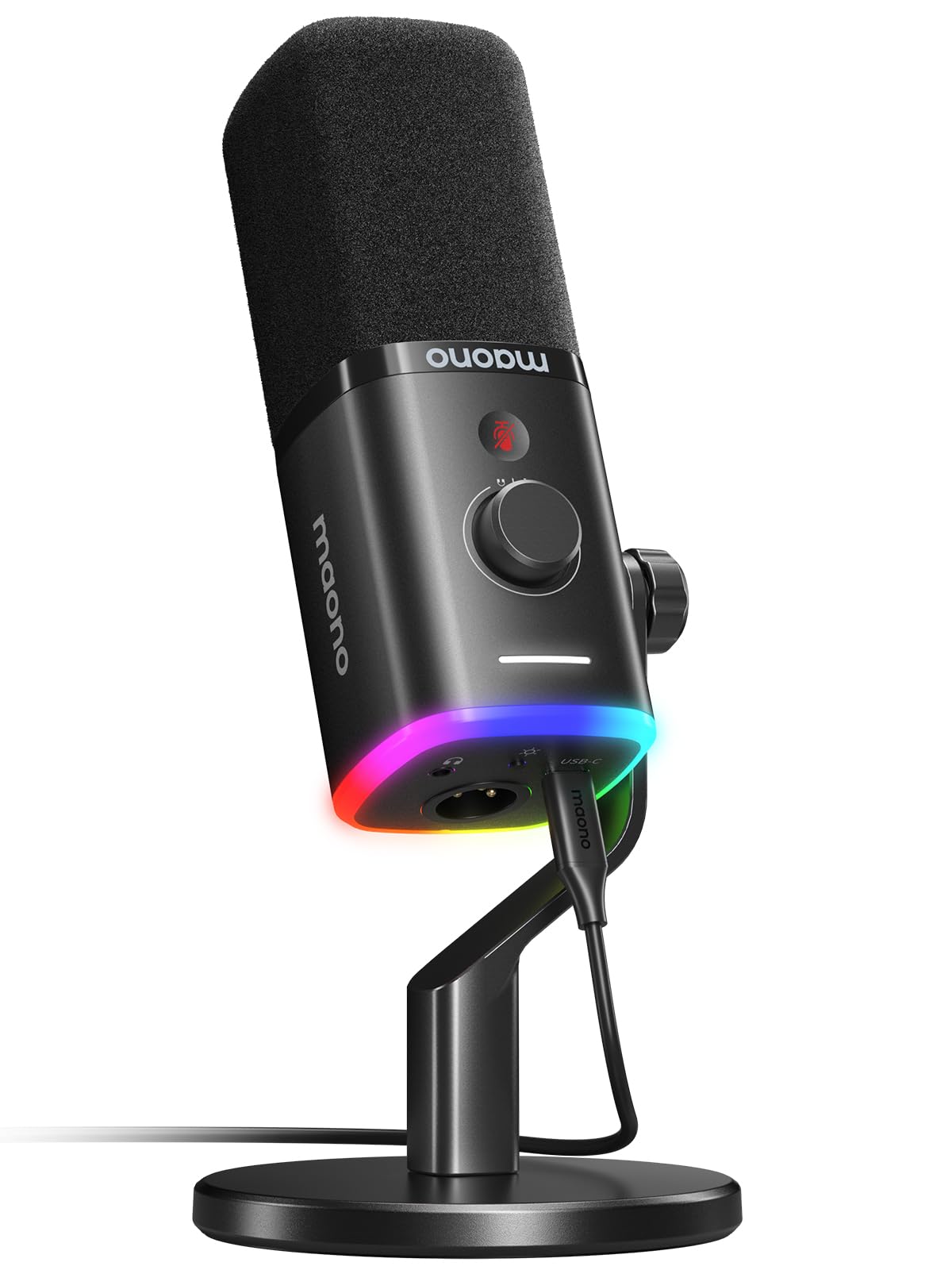
A practical fit for streamers and podcasters who want USB controls now and the option to connect through an XLR setup later.
- Dynamic microphone with a customized cardioid capsule intended to focus on sound from the front and reject ambient noise.
- USB and XLR connectivity; USB offers plug-and-play use, while XLR connects to an audio interface or mixer with a separate XLR cable.
- 24-bit/48 kHz sampling rate and a stated frequency response of 40 Hz–16 kHz.
- USB-only MaonoLink software provides adjustable noise reduction and RGB controls.

Pros
- Offers both a beginner-friendly USB connection and an XLR connection for compatible recording equipment.
- Keeps useful streaming controls on the microphone in USB mode, including tap-to-mute and monitoring-volume adjustment.
Consider before buying
- The XLR cable is not included, and using that connection requires a compatible mixer or audio interface.
- RGB, MaonoLink noise reduction, mute, gain and monitoring controls, and headphone monitoring are available only over USB.
Read the full review summary
The PD100X combines a cardioid dynamic capsule with USB and XLR connections.
USB is the simpler route for a computer setup, and it enables the microphone’s RGB lighting, mute control, gain and monitoring knob, headphone monitoring, and software adjustments.
XLR requires a separate cable and compatible audio equipment, and the USB-only controls and effects do not carry over to that connection.
That makes this model worth considering for someone who expects to record at a desk and wants room to change how the microphone connects over time.
It is especially suited to gaming, streaming, and podcasting workflows that can use a headphone output and quick mute. Buyers choosing an XLR setup should account for the additional gear and the loss of USB-specific functions.
The buying factors
MAONO PD100X Scorecard
Editorial scores reflect listed features and buyer fit; they are not laboratory measurements or customer ratings.
Connection flexibility
USB and XLR provide two ways to fit the microphone into a computer or audio interface setup.
USB convenience
Plug-and-play computer use and accessible onboard controls support a straightforward starting setup.
Control access
USB mode includes tap-to-mute, gain and monitoring-volume control, plus a headphone monitoring jack.
Noise-management options
The cardioid capsule and adjustable software noise reduction offer useful tools for handling ambient sound.
Setup customization
USB users can choose from RGB modes and colors, adjust lighting, or turn it off.
XLR workflow support
XLR adds integration flexibility, but the connection needs a separate cable and compatible equipment; USB functions are unavailable over XLR.
Key Features and Specifications of MAONO PD100X
- Dynamic microphone with a customized cardioid capsule intended to focus on sound from the front and reject ambient noise.
- USB and XLR connectivity; USB offers plug-and-play use, while XLR connects to an audio interface or mixer with a separate XLR cable.
- 24-bit/48 kHz sampling rate and a stated frequency response of 40 Hz–16 kHz.
- USB-only MaonoLink software provides adjustable noise reduction and RGB controls.
- Three RGB modes and eight color options, with controls for brightness and the ability to switch off the lighting.
- USB-only tap-to-mute, a combined knob for gain and monitoring volume, and a headphone jack for real-time monitoring.
Pros and Cons of MAONO PD100X
Pros
- Offers both a beginner-friendly USB connection and an XLR connection for compatible recording equipment.
- Keeps useful streaming controls on the microphone in USB mode, including tap-to-mute and monitoring-volume adjustment.
- Combines cardioid pickup with adjustable software noise reduction for different recording environments.
- RGB lighting is customizable and can be turned off.
Consider before buying
- The XLR cable is not included, and using that connection requires a compatible mixer or audio interface.
- RGB, MaonoLink noise reduction, mute, gain and monitoring controls, and headphone monitoring are available only over USB.
- The supplied specifications describe a 40 Hz–16 kHz frequency response; buyers seeking a particular vocal range should decide whether that range suits their recording needs.
Who Should Buy MAONO PD100X?
Good fit
Consider the PD100X if you want a desktop microphone for gaming, streaming, or podcasting and value straightforward USB setup.
The onboard mute button, gain and monitoring-volume knob, and headphone jack make routine adjustments accessible while the microphone is connected over USB.
It also makes sense if you may move to an XLR-based setup later.
The microphone supports that connection, but plan for a separate cable and a mixer or audio interface, and expect the USB-only controls and software functions to be unavailable in XLR mode.
Who should skip it
Skip it if you need a wireless microphone or want the same onboard controls and software options while connected through XLR. The described design is corded, and those functions are USB-only.
Look elsewhere if your recording setup requires a response range beyond 40 Hz–16 kHz or a different connection arrangement. Check the needs of your recording chain before choosing.
How the MAONO PD100X fits a desktop recording setup
USB first, with XLR as another connection option
The two connection types serve different stages of a setup.
USB is the simple route for a computer and enables the listed controls; XLR can connect to a mixer or audio interface, but requires a cable and compatible gear.
Before buying, decide which connection you will use most and whether losing the USB functions in XLR mode fits your workflow.
The controls are built around USB use
Tap-to-mute can help when you need to silence the microphone quickly, while the combined knob adjusts gain and monitoring volume. The headphone jack supports real-time monitoring.
These are practical conveniences for a desk session, but they depend on using USB, so they should not be counted on in an XLR-only configuration.
Noise tools are adjustable rather than one-size-fits-all
The cardioid capsule is intended to capture sound from the front while reducing ambient sound, and MaonoLink lets USB users adjust software noise reduction. This gives the owner ways to tailor the setup to the room.
If you record near a noisy source, consider whether mic placement and your environment will also need attention.
Lighting and sampling specifications in context
Three lighting modes and eight color options let USB users coordinate the microphone with a gaming or streaming desk, and the lights can be turned off.
The stated 24-bit/48 kHz sampling rate and 40 Hz–16 kHz response give useful format and range details; buyers with specific recording requirements should compare those figures with their intended workflow.
Alternatives to MAONO PD100X
Instrument Dynamic Microphones alternative
1,000+ ratings
Read Amazon ReviewsMAONO PD100XS
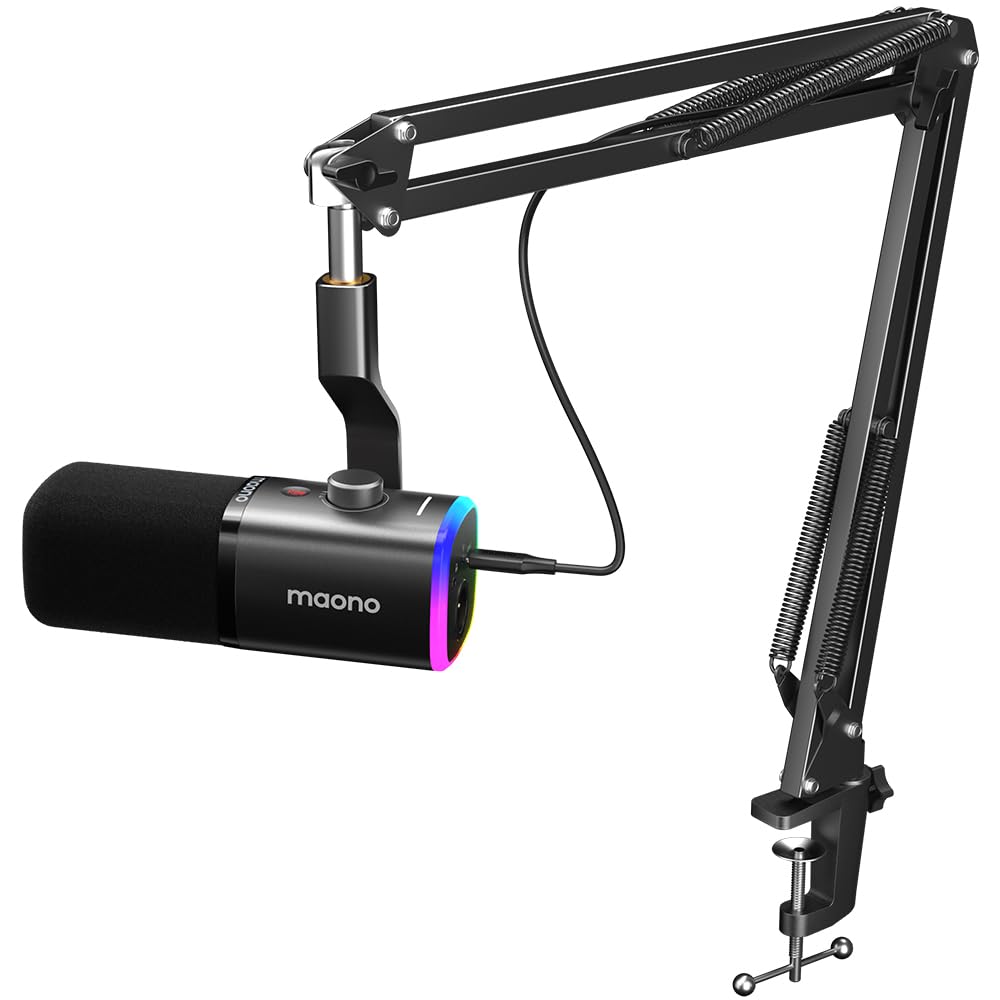
Compare the PD100XS if a boom arm and the listed gaming-console compatibility suit your setup.
The PD100X may be a better fit if its desktop-oriented presentation and eight RGB color options match your preferences; both models reserve their controls and lighting features for USB use.
- The PD100XS also offers USB and XLR, USB-only noise reduction and controls, and customizable RGB, with three lighting modes and nine color options.
- Its description identifies a boom arm and says USB works with desktop, laptop, PS4, and PS5.
- The PD100X offers USB and XLR, USB-only RGB and software noise reduction, and USB-only mute, gain, monitoring-volume, and headphone-monitoring functions.
Battery-focused alternative
800+ ratings
Read Amazon ReviewsMAONO PD200W
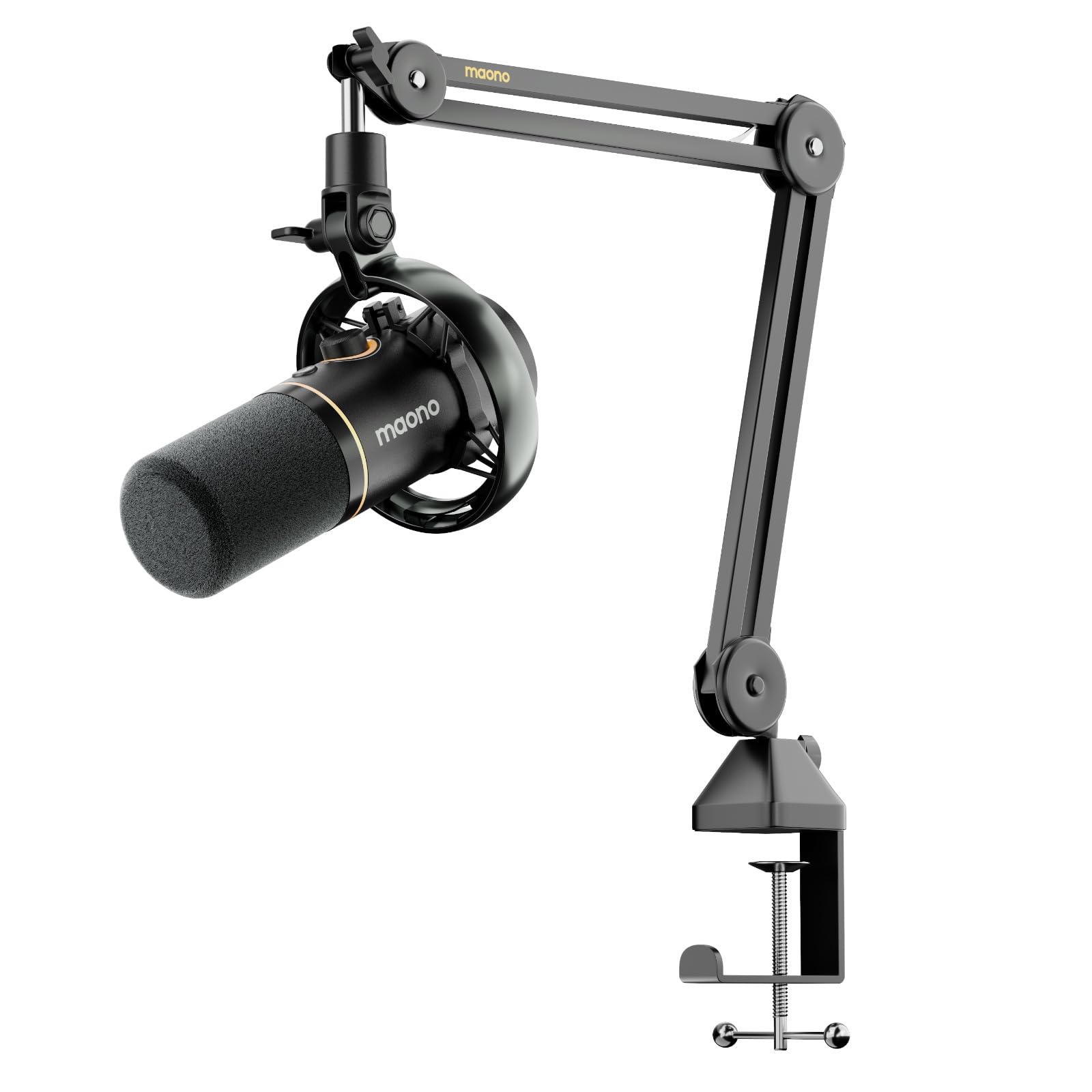
Consider the PD200W if wireless placement or two-microphone conversations are central to your use. The PD100X offers a simpler corded setup for buyers who do not need those features.
- The PD200W adds wireless operation alongside USB and XLR, and its description includes a boom arm, up to 60 hours of battery life with RGB off, and support for two wireless boom-arm microphones connecting to one receiver.
- The PD100X is a corded dynamic microphone with USB and XLR; its listed controls, RGB, and software noise reduction are USB-only.
Is MAONO PD100X Worth It?
The MAONO PD100X is worth considering as a flexible desktop mic for gaming, streaming, and podcasting, especially if USB convenience and accessible monitoring controls matter to you.
Its cardioid design and adjustable USB noise reduction add useful options for tailoring a recording setup.
Choose it with the connection tradeoff in mind: USB enables the onboard controls, headphone monitoring, software adjustments, and RGB, while XLR requires separate equipment and does not provide those USB-only features.
If that division suits your plans, the PD100X offers a clear route from simple computer recording to a compatible XLR setup.
Your review at a glance
1,000+ ratings
Read Amazon ReviewsMAONO PD100X
A practical fit for streamers and podcasters who want USB controls now and the option to connect through an XLR setup later.
- Dynamic microphone with a customized cardioid capsule intended to focus on sound from the front and reject ambient noise.
- USB and XLR connectivity; USB offers plug-and-play use, while XLR connects to an audio interface or mixer with a separate XLR cable.
- 24-bit/48 kHz sampling rate and a stated frequency response of 40 Hz–16 kHz.
- USB-only MaonoLink software provides adjustable noise reduction and RGB controls.