The Kodak SCANZA is designed to make home digitizing approachable, with adapters for several film formats, a built-in display, and JPEG capture.
This kodak scanza film scanner review looks at where its broad format support helps and what buyers should consider before choosing it for an archive.
Kodak SCANZA Review Summary
The quick verdict
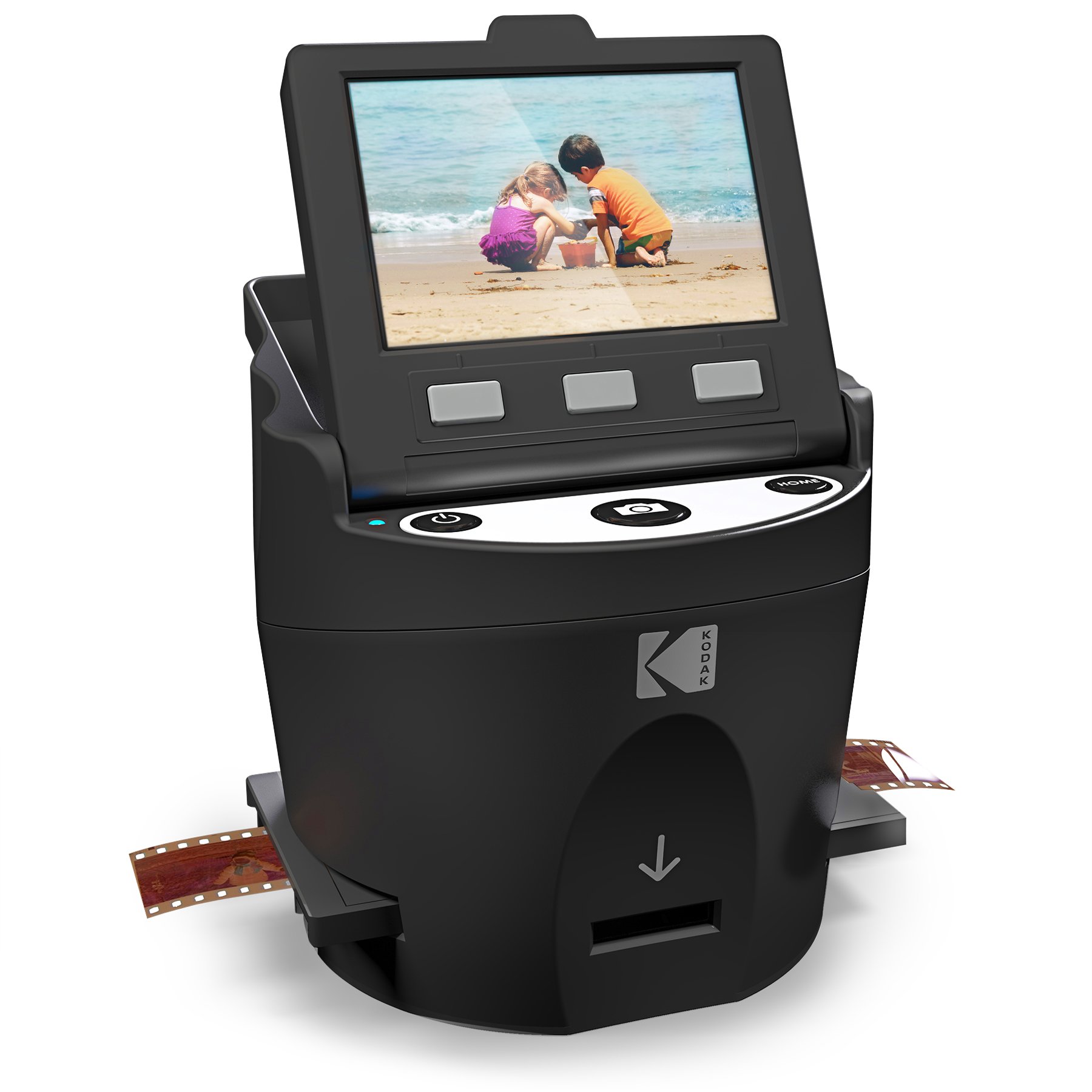
11,000+ ratings
Read Amazon ReviewsKodak SCANZA
A practical option for digitizing 35mm, 126, 110, Super 8, and 8mm film with on-device preview and straightforward controls.
- Converts 35mm, 126, 110, Super 8, and 8mm negatives and slides to JPEG files; the description explicitly limits conversion to these formats.
- Offers listed 14MP/22MP capture options.
- Built-in 3.5-inch TFT color LCD has adjustable brightness and a tilt for viewing.
- Multiple film inserts and adapters, plus a directory for choosing trays and inserts.

Pros
- Handles a varied set of film formats, including Super 8 and 8mm.
- A tilting, adjustable display makes it possible to preview and browse without relying solely on a computer screen.
Consider before buying
- An SD card is required for saving but must be supplied separately.
- Its conversion support is limited to the five named film formats, so buyers should check their collection before purchasing.
Read the full review summary
The SCANZA combines a 3.5-inch color display, adjustable brightness, a tilting screen, and film inserts for 35mm, 126, 110, Super 8, and 8mm material.
Its one-touch scan and save controls and included tray directory are intended to keep format changes and basic operation manageable.
It may suit someone who wants to digitize a mixed collection and preview images on the scanner itself.
The design supports editing RGB and resolution settings and browsing a gallery, while saving requires an SD card, which is not included; the stated card support is up to 128GB.
The buying factors
Kodak SCANZA Scorecard
Editorial scores reflect listed features and buyer fit; they are not laboratory measurements or customer ratings.
Film format coverage
The listed inserts cover five formats, including Super 8 and 8mm alongside common still-film sizes.
On-device preview
A bright, adjustable 3.5-inch color display tilts for viewing and operation.
Ease of operation
One-touch buttons and a tray and insert directory support a guided workflow.
Capture flexibility
The interface offers RGB and resolution editing, though the description does not detail the extent of those adjustments.
Save and browse workflow
Gallery browsing and SD-card saving are supported, with the card purchased separately.
Included setup items
Power, HDMI, and video cables, an AC adapter, and a cleaning brush are included.
Key Features and Specifications of Kodak SCANZA
- Converts 35mm, 126, 110, Super 8, and 8mm negatives and slides to JPEG files; the description explicitly limits conversion to these formats.
- Offers listed 14MP/22MP capture options.
- Built-in 3.5-inch TFT color LCD has adjustable brightness and a tilt for viewing.
- Multiple film inserts and adapters, plus a directory for choosing trays and inserts.
- One-touch scan and save buttons, with interface options to edit RGB and resolution and browse the gallery.
- SD card is not included; supported capacity is up to 128GB.
- Includes USB power cable, HDMI cable, AC adapter, video cable, and film cleaning brush; described as compatible with Mac and PC.
Pros and Cons of Kodak SCANZA
Pros
- Handles a varied set of film formats, including Super 8 and 8mm.
- A tilting, adjustable display makes it possible to preview and browse without relying solely on a computer screen.
- Dedicated inserts and a directory help organize the handling of different film types.
- The included cables and AC adapter provide several connection and power accessories in the box.
Consider before buying
- An SD card is required for saving but must be supplied separately.
- Its conversion support is limited to the five named film formats, so buyers should check their collection before purchasing.
- The display measures 3.5 inches, which may feel small for extended image review or showing scans to a group.
Who Should Buy Kodak SCANZA?
Good fit
Consider the SCANZA if your collection includes a mix of 35mm, 126, 110, Super 8, and 8mm material and you want a scanner with format-specific inserts.
Its screen, gallery, and one-touch controls suit a straightforward home workflow where previewing and saving on the device are useful.
It is also a reasonable fit if you value having the main power and display cables included.
Before buying, confirm that your film falls within the supported formats and plan for a compatible SD card, since one is not supplied.
Who should skip it
Skip it if your archive is made up of film formats beyond 35mm, 126, 110, Super 8, and 8mm; the product description says it will not convert other formats.
If large-screen inspection is central to your workflow, consider whether a 3.5-inch display will be comfortable for you.
Kodak SCANZA film scanner review: format range and workflow
Format coverage for mixed archives
The SCANZA’s notable practical strength is the range of material it is built to accept.
It lists adapters for common still-film formats as well as Super 8 and 8mm, so one device may cover different eras or sources in a household collection.
Check the film labels or frame size before ordering, because the listed support is specific rather than universal.
A self-contained preview experience
The 3.5-inch TFT display provides a local view of scans, and adjustable brightness and tilt give some flexibility in how it is positioned. Gallery browsing and editing controls let buyers interact with images at the unit.
The screen is compact, so it is best understood as a convenient preview surface rather than a large viewing display.
Controls and image adjustments
One-touch scan and save buttons aim to reduce the number of steps for a basic capture, while the tray directory can help identify the insert to use. The interface also offers RGB and resolution editing.
Buyers who need a highly controlled editing workflow should consider how much adjustment they expect to do after capture, since the description does not specify the full range of editing tools.
Planning the save and cleaning routine
The SCANZA uses an SD card for saving, and the supported capacity is up to 128GB; the card itself is not included.
The supplied brush can clean film and the light box, a useful step because dust or speckles on the light path can show up as marks in scans.
Keeping the media clean and having a card ready make setup more predictable.
Alternatives to Kodak SCANZA
Slide & Negative Scanners alternative
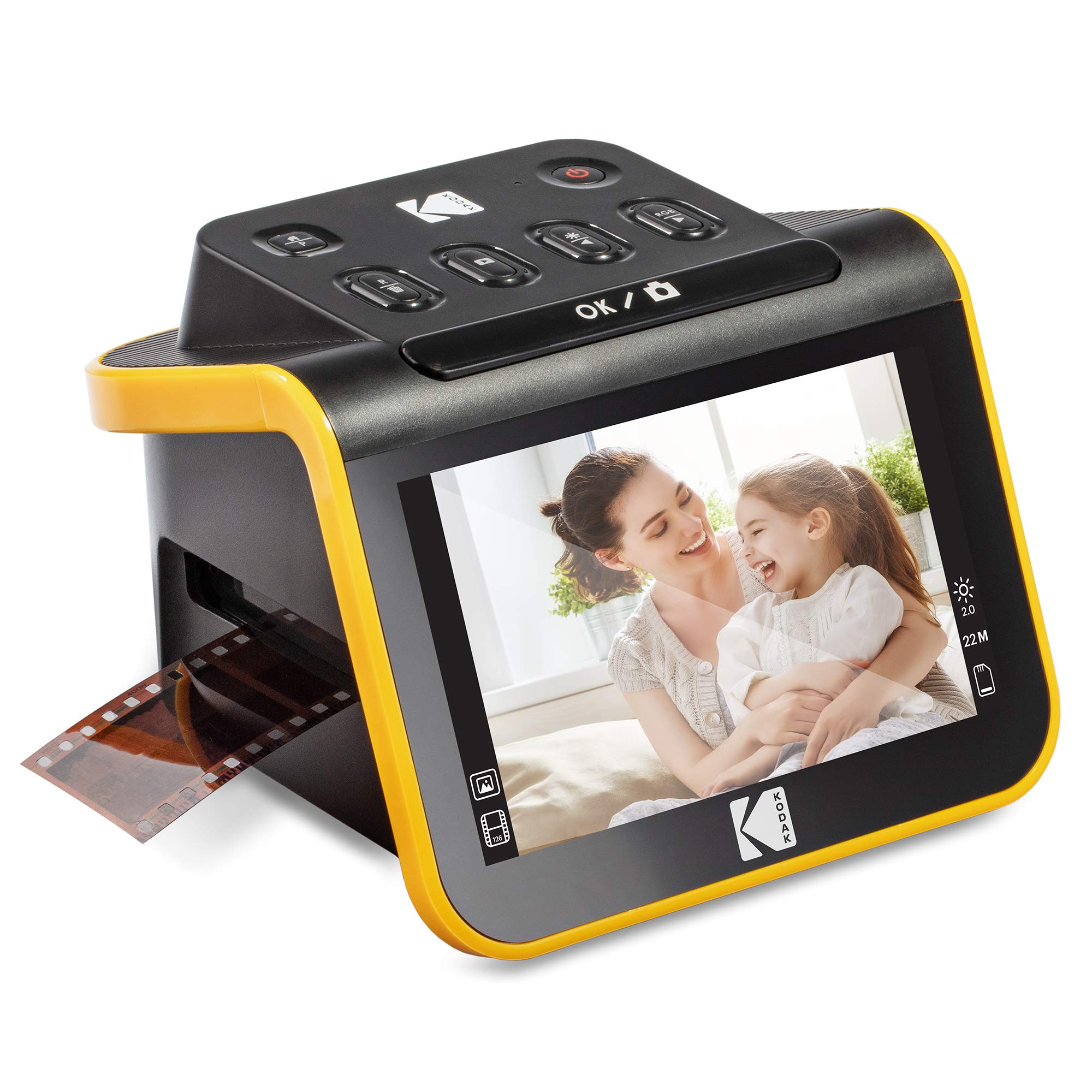
12,000+ ratings
Read Amazon ReviewsKodak Slide N Scan
Choose the SCANZA if Super 8 or 8mm support matters to your collection.
The Slide N Scan is a more relevant fit if your material is in its listed 135, 110, and 126 formats and a larger 5-inch screen or continuous tray loading is more appealing.
- The Slide N Scan description lists 135, 110, and 126 film and slides, a 5-inch LCD with gallery mode, continuous feed tray technology, and SD or SDHC card support up to 32GB.
- The SCANZA supports 35mm, 126, 110, Super 8, and 8mm formats and has a 3.5-inch adjustable display.
Slide & Negative Scanners alternative
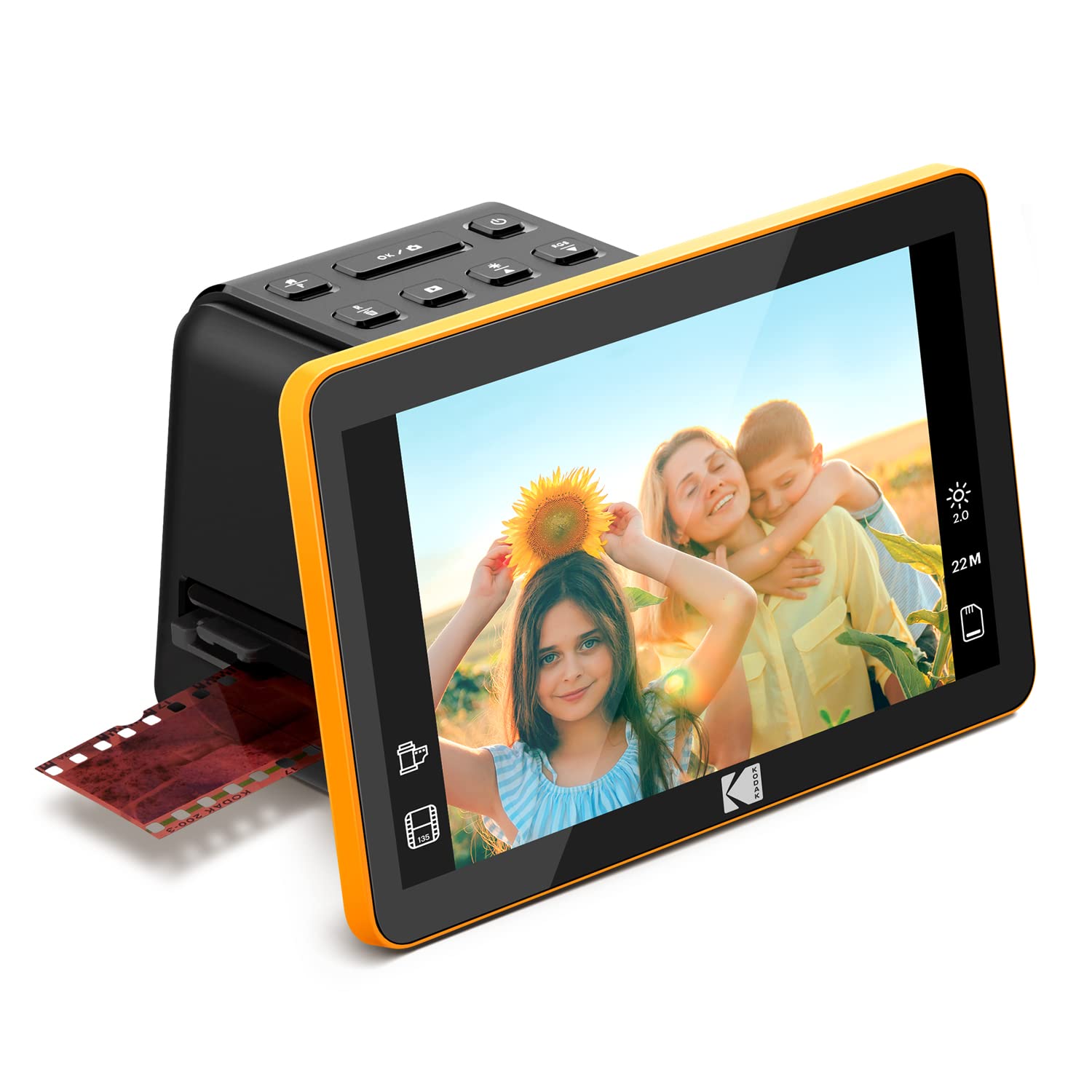
1,000+ ratings
Read Amazon ReviewsKodak Slide N Scan Max
The SCANZA has the clearer fit for a buyer who needs the listed Super 8 and 8mm support.
The Slide N Scan Max may suit a still-film collection in its supported formats when its stated output resolution and direct card-saving workflow align better with the buyer’s priorities.
- The Slide N Scan Max lists 135, 110, and 126 film and slides, direct saving to SD or SDHC cards up to 32GB, and one-touch editing.
- Its description specifies a 13MP CMOS sensor with 22MP interpolation and output up to 4208 × 3120.
- The SCANZA lists five formats, including Super 8 and 8mm, and includes an adjustable 3.5-inch display.
Is Kodak SCANZA Worth It?
The Kodak SCANZA is worth considering for home digitizing when a collection spans the five formats it supports and on-device preview is a useful part of the process.
The included inserts, adjustable screen, and simple scan controls make its intended workflow easy to understand.
Check your film format before committing, and budget for a separate SD card. If your archive is outside the supported range or you want a larger display, compare the competing designs against those specific needs before choosing.
Your review at a glance
11,000+ ratings
Read Amazon ReviewsKodak SCANZA
A practical option for digitizing 35mm, 126, 110, Super 8, and 8mm film with on-device preview and straightforward controls.
- Converts 35mm, 126, 110, Super 8, and 8mm negatives and slides to JPEG files; the description explicitly limits conversion to these formats.
- Offers listed 14MP/22MP capture options.
- Built-in 3.5-inch TFT color LCD has adjustable brightness and a tilt for viewing.
- Multiple film inserts and adapters, plus a directory for choosing trays and inserts.